
Seeds
Seeds
(to grow, not to eat)
Wild Pantry is
now offering a selection of seeds for edible wild plants, medicinal plants, and
just because the
plant is beautiful to look at.
If there are
seeds that you would like to find and can't locate, please email and we may be
able to find them or furnish them for you.
Please advise
your zip code and we can advise shipping cost.
New!
  |
|
|
|
2 packs/20 seeds $18.00 plus shipping (Save $2.00) |
 Red Clover Seeds - aka |
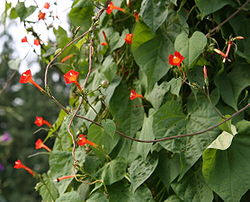 Small Red Morning - Small Red Morning Glory is also known as Redstar (attracts hummingbirds!) (click here to see photos) - seeds $3.50/10 seeds, plus shipping. |
 In Stock
Photo credit: http://www.uniprot.org/taxonomy/89660
|
|
|
|
Milk weed
plant seeds - Great news for Monarch butterflies and foragers too.
Asclepias syriaca
(Common
Milkweed) seeds - $3.00/15 seeds, plus shipping.
|
|
In Stock American
Beautyberry (Callicarpa
|
|
Spice Bush (also known as Wild Allspice, Spicebush, Common Spicebush, Northern Spicebush or Benjamin Bush) (Lindera benzoin) seeds - pack of 25 seeds $5.00/plus shipping. Email to order
Spicebush berries have been used as a substitute for Allspice.
Distribution
USA:
AL , AR , CT , DE , FL , GA , IL , IN , IA , KS , KY , LA , ME , MD , MA , MI ,
MS , MO , NH , NJ , NY , NC , OH , OK , PA , RI , SC , TN , TX , VT , VA , WV ,
DC
The best way to grow Spicebush is
to collect the red berries in the fall, delicately chew the flesh off the seeds
so you don't crush the seed, and eat it, take the seed and plant it. It should
germinate by the upcoming spring. The taste of the berry will linger with you
for a while, but it freshens your breath and leaves a nice spicy flavor behind. |
|
QAL Seeds - 30
seeds $3.00
plus $2.50
shipping
Wild Carrot, Queen Anne's Lace, seed whole
Daucus carota
Click here to get ordering info.
- Wild Carrot, Queen Anne's Lace, seed whole bulk
|
|
The red fruit has
a mild apple flavor. Packet of 50 seeds/$5.00, plus plus $2.50
shipping.
American Wild
4 seeds $3.00,
plus $2.50 shipping
American plum
germinates more consistently following cool, moist stratification at 36 to 41
|

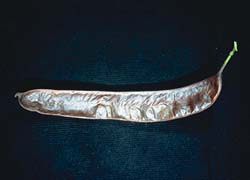
Honey Locust
Seeds - $2.00/seeds - pack of 8, plus shipping.
In Stock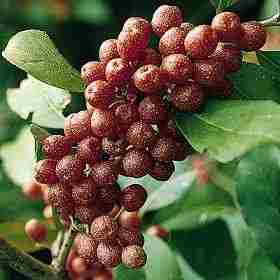
Autumn Olive
Seeds (Elaeagnus
umbellata)
10
seeds/packet $4.00 - 20 seeds/packet $7.50, plus
$2.50 shipping.
Email to order
Cannot ship to
Australia
Cannot ship to
Australia
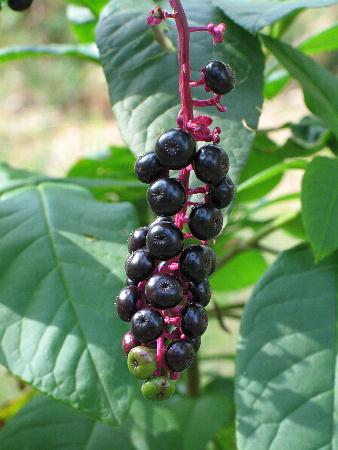
Poke Weed (Phytolacca
Poke Weed is a
perennial plant that grows good in average soils in direct sun or partial shade
and is hardy in growing zones 4-9. For best germination results, soak the
seeds in sulfuric acid solution for 5 minutes. Poke seeds germinate best
in the wild after being passed through a bird's digestive system. Birds love the
berries, but they are poisonous to humans so do not eat the seeds. Poke
greens should be picked early in the spring before they get over 4-6" high. Boil
in two changes of water before using in your recipe.
IN
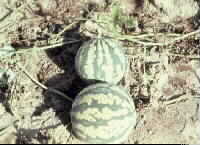
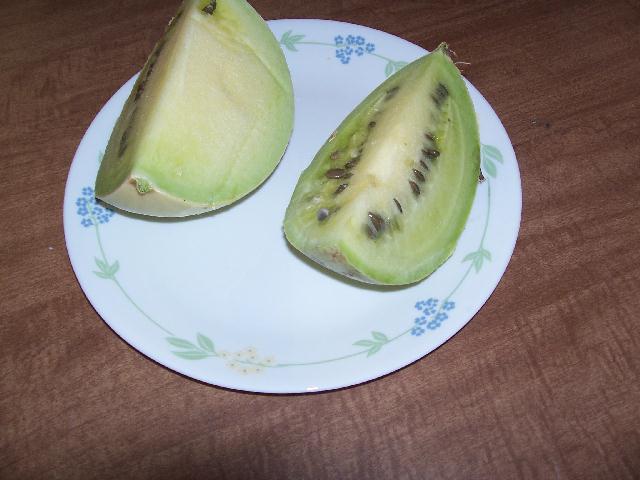
Striped Citron
Melon
Citron Melon -
Stock Melon, Preserving Melon, Wild Watermelon, Tsamma
-
Cucurbitaceae -
Citrullus lanatus var. lanatus - Citrullus colocynthis var. lanatus -
t'sama (Khoisan); karkoer; bitterwaatlemoen (Afrikaans); makataan (Tswana),
watermelon
$2.50/pack/25
seeds, plus $2.50 shipping
http://www.ibiblio.org/pfaf/cgi-bin/arr_html?Citrullus+lanatus
Seed
germination for citron melon and watermelons:
There is no
seed dormancy in cultivated seed- and watermelons, but germination is retarded
under high temperature regimes. Germination can be accelerated by pre-soaking in
water for 24 hours after scarifying the seed at one end, especially for
cultivars which have a hard seed coat. Seed germinates best at temperatures of
17°C at night and 32°C at daytime and also at a constant temperature of 22°C. It
will not germinate at temperatures below 15°C. Light has an inhibitory effect. (van
der Vossen et al., 2004)
Growth, development and
pollination:
Seed will remain viable for at
least 8 years when stored dry at temperatures below 18°C. Emergence of the
seedling takes 5–7 days. Cotyledons unfold after 10–12 days and the first true
leaf appears one week later. In egusi melon lateral branches are produced on the
main stem from node 4–6 and the first male flower is formed on node 8–11 at
35–50 days after sowing, the first female flowers on node 15–25 at 45–60 days
after sowing. In watermelon both the first male and female flowers are formed
somewhat later. The first female flowers often have poorly developed ovaries and
fail to set fruit. Flowering peaks 50–80 days after germination. Flowers open
shortly after sunrise and remain open only one day. Pollination occurs in the
morning and is done by insects, predominantly bees. Ample deposition of pollen
on all three stigmas is necessary for regular fruit development. Within 24 hours
after pollination the pedicel starts to elongate and bends downward with the
swelling ovary. The fruits of watermelon are mature 30–50 days after
pollination. At maturity the green fruit stalk turns brown.
Sassafras
Seeds -
Sassafras
albidium (officinale) -
10 seeds/pack
$3.00, plus $2.50 shipping
Wild mustard
Seeds -
Brassica rapa
- $2.50/pack, plus shipping
Creecy Greens
(early yellow rocket, dry land cress)-
Barbarea verna
- $2.50/pack, plus shipping (organic seed) out of stock
We will also be including wild crabapple seeds, teaberry, and some others as
they become available.
Ornamentals,
not edible
DATURA,
Jimsonweed, Thorn apple,
Seed packets -
75 seeds/pack $5.00, plus shipping
Seeds need
stratification for several weeks in order to germinate (place in freezer)