
Beans
If you have a product that you
would like us to carry please email Wild Pantry.
In order to comply with USDA food safety regulations, we do not sell nor provide anything containing meat, poultry, canned low acid foods, or dairy products. We sell herbs (plants) for a novelty, religious, or food supplements only..
Anasazi Beans aka Aztec bean & Cave
bean
-
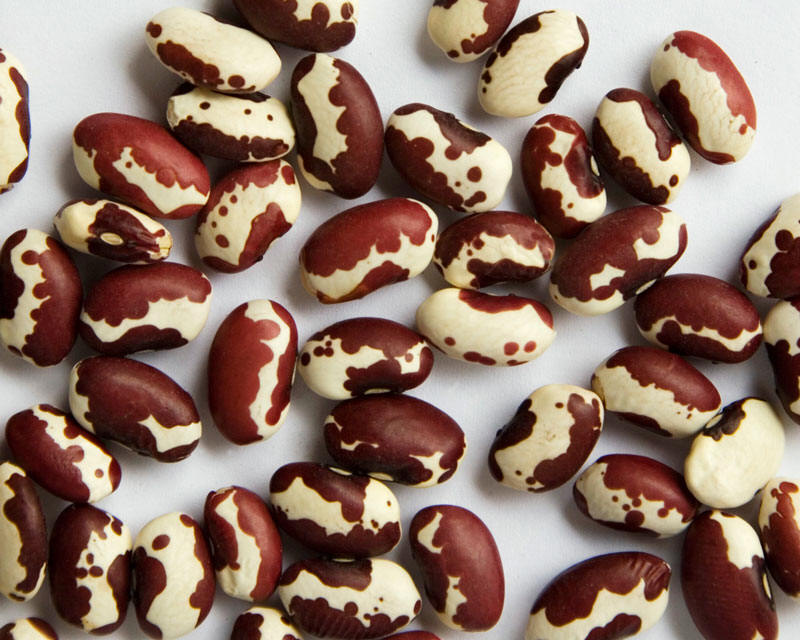
Anasazi beans are a dappled bean that was originally
grown by the Anasazi Indians dating back to 130 AD. Anasazi beans are related to the pinto bean. The taste is sweet and slightly mealy and cooks a lot faster than pinto beans.
1 lb package $7.50 plus shipping
Please email us
Nutritional Highlights
Anasazi beans, 1/4 cup (44g)
Calories: 150
Protein: 10g
Carbohydrate: 27g
Total Fat: 0.5g
Fiber: 9g
*Good source of: Iron (2.7mg)
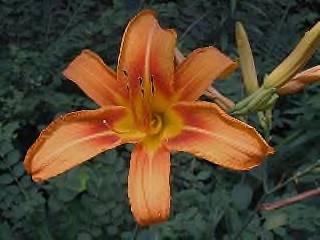

Day Lily (in stock)
Day Lily buds or flowers (also known as golden needles and tiger lily) (fresh they taste similar to green beans) - best used fresh, but can be used dried in soups and stews for an added green bean like flavor.
Day lily buds and flowers are popular with Asian recipes. Dried lily buds are yellow-gold in color, with a musky or earthy taste. Soak in warm water at least 30 minutes before use.$8.00/100g. (flowers or buds) plus shipping.
Please email us for availability.
Mesquite Beans - out of stock but obtainable from another source.
2 oz. whole mesquite beans - package $4.00
1/4 lb. whole mesquite beans - package $6.00
1/2 lb. whole mesquite beans - package $9.00
Mesquite Meal - out of stock -
but obtainable from another source
Tepary Beans (Phaseolus
acutifolius) - looking for commercial
source.
First grown in the Southwest during the time of the Hohokam Indians, teparies
mature quickly and are tolerant of the low desert heat, drought and alkaline
soils. Soak the dried beans before cooking.
Please email us for availability.
Honey Locust
- Gleditsia triacanthos
L.
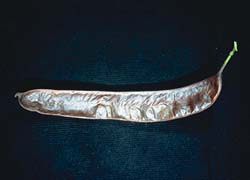
honey locust pod
Beans/Pods/ -
available
$24.00/lb. dry whole pod, plus shipping.
$3.50/4 oz. ground pods/meal, plus shipping.
$2.00/seeds - pack of 20, plus shipping.
Please email us for availability.
The honey locust is a North American tree. It was occasionally naturalized in Central and Southern Europe. Other common names used for it include Sweet bean, Sweet locust and Honeyshuck.
The pulp around the seeds in the pods is edible, being sweet and molasses-like, and sugar can be extracted from it.
Pods generally contain 12-14% sugar, although in selected cultivators this rises to up to 40%. Various North Americans recipes exist for making beer from the pulp.
The tender young pods are edible when cooked. Also edible are the seeds, raw or cooked; the young seeds taste like raw peas. The seeds are sweet, containing up to 30% sugar, also 10-22% protein, 0.8-4.2% fat, and are high in calcium (275mg/100g) and phosphorous (315mg/100g). Roasted seeds can be used as a coffee.
The pods are a source of ethanol production. Pod yields of 2.5 tons of dry matter per Hectare (85 trees/Ha producing 30kg pods dry weight) would yield 730 litres of ethanol which is only 20% of that obtained from a hectare of sugar beet.
As a special note, extracts from the honey locust pod is a main ingredient (anti-dandruff) in many shampoo and hair products.
Simple recipe for honey locust shampoo additive or rinse. Boil the pods until they are tender, strain the liquid and either add a bit to your shampoo or simply wet your hair with the liquid and let it dry. Do not rinse it out.
|
As a sustainable and a low input source, though, it is much more viable.
Honey locust is a good asset for forage trees especially for animals.
(source: http://permaculture-watch.blogspot.com/2009/08/honey-locust-as-forage-tree.html)Comment from a reader:
From: jp
To: Wild Pantry
Sent: Thursday, February 01, 2007 2:14 PM
Subject: Wild Pantry---re: honey locust beans!
How do you do?
Just wanted to let you know that I recently roasted about an ounce of honey
locust beans and then ground them up and made an 11 cup pot of drip coffee. The
colour was similar to tea and the taste was quite pleasant.
The beans were gathered from the ground here in s/w Ontario, Canada having been
freeze-dried since falling last fall.
When it was time to clean out the coffee-maker, I found that all of the ground
beans had somehow coagulated. Being of a curious nature, I decided to place this
concoction into the oven at 300 F. for about 1 ½ hours.
Wondering if you have ever heard of this sort of thing before? Also, if you have
any other suggestions regarding uses for this wonderful bean?
I would also like to compliment you on your wonderful website!!! Haven't
finished checking it all out yet but I most definitely will!
Thank for your time,
Joe P.
p.s. feel free to share this info on your web-site
For more information
click here for details.
If you have any questions about our products please
give us a call at (423) 371-1518 (cell) or email us at your
convenience.
Please note that prices can change at any time as we update our site when time is available. Please email us if you have any questions regarding prices.
In order to comply with USDA food safety regulations, we do not sell nor provide anything containing meat, poultry, canned low acid foods, or dairy products. We sell herbs (plants) for a novelty, religious, or food supplements only. We may list other sites that sell FDA regulated products, but we are not in any way responsible for what others sell.
We reserve the right to refuse to supply any company or person for any reason.